
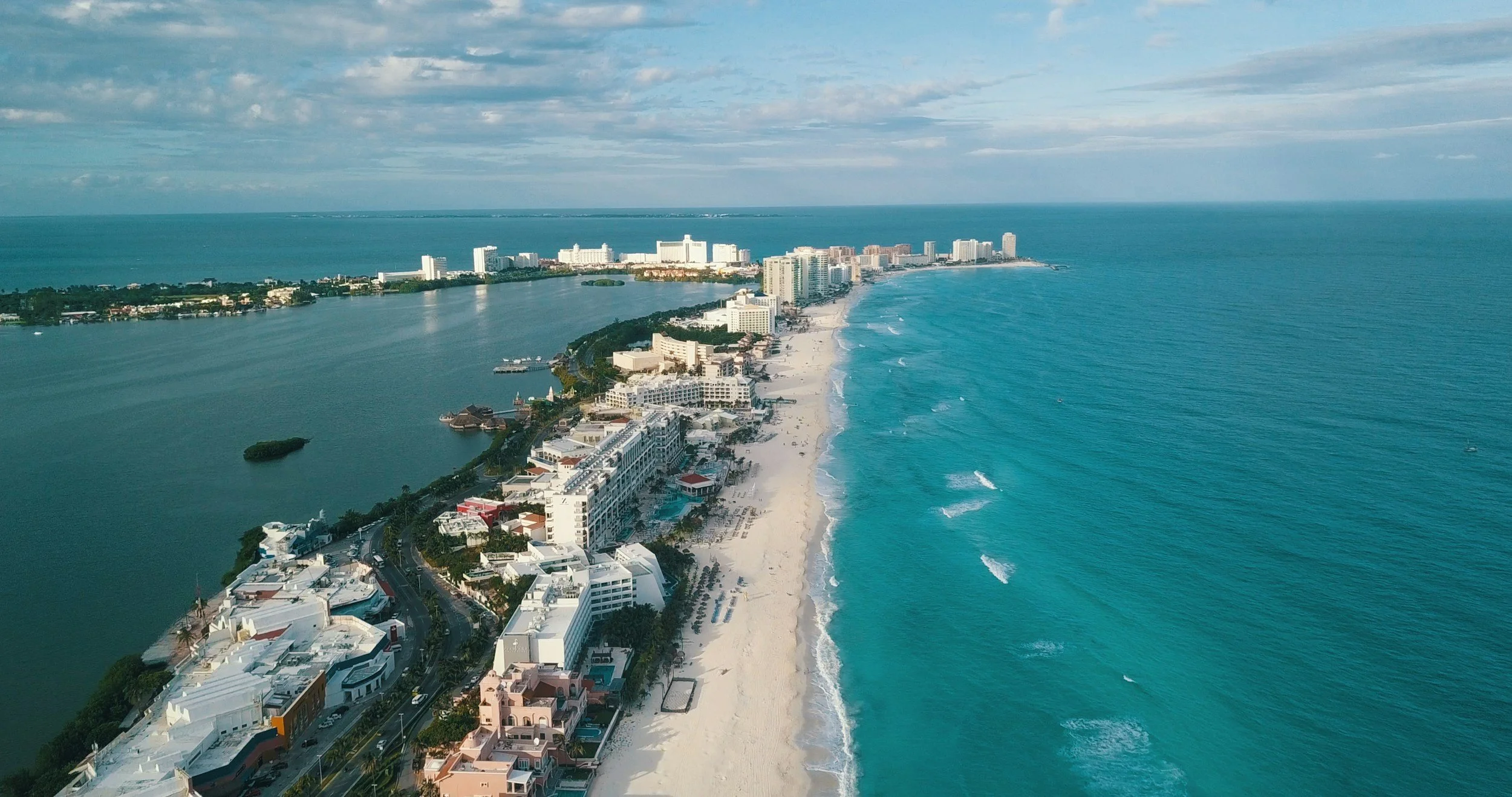
Is Cancún Safe Right Now? A Calm Look at the Map
Mexico headlines can feel alarming when you have a trip on the calendar. Here is a calm look at the geography behind them, and what the Caribbean coast has experienced.
Quick answer: Mexico is a very large country, and its travel advisories are issued state by state. Reporting earlier this year described Cancún and the Riviera Maya, in the state of Quintana Roo, as operating normally even during a period of unrest in western Mexico. I recommend checking the current U.S. State Department advisory before any trip, and I am always happy to talk through it with you.
If you have a Mexico trip on the calendar, a headline may have caught your eye recently. Mexico has been in the news this year, and it is natural to wonder what that means for your own week by the sea.
A helpful first step is a look at the map, since the story depends so much on where in Mexico it is happening.
Why geography matters so much
Mexico stretches across a coastline on the Pacific, another on the Gulf, and the Caribbean shoreline where Cancún, Playa del Carmen, and Tulum sit. Those regions are separated by hundreds of miles and experience very different conditions.
In late February 2026, violence flared in the state of Jalisco, home to Puerto Vallarta, after a major military operation. The U.S. Embassy lifted its shelter-in-place guidance on February 24. Cancún and the Riviera Maya had no shelter-in-place warnings, and reporting at the time described the region as business as usual.
The Pacific side has also been the one affected by weather lately. Hurricane Polo, which strengthened to a Category 5 storm in late September, stayed offshore and influenced the Pacific coast, while the Caribbean side saw no impact.
How the travel advisory works
The U.S. State Department issues Mexico advisories at the state level. Mexico as a whole has carried a Level 2, "Exercise Increased Caution," in 2026 reporting, and Quintana Roo, which includes Cancún, Playa del Carmen, and Tulum, has been listed at Level 2 as well. The states carrying the highest level of warning are on the Pacific coast, inland, or along the northern Gulf coast, and none sits on the Caribbean shoreline.
Level 2 is the same category used for many popular European destinations, and it simply invites travelers to stay aware. The advisory pages at travel.state.gov are updated regularly, so I recommend a quick look before you travel.
What staying calm and prepared looks like
Preparation tends to be what makes a trip feel relaxed. Enrolling in the State Department's Smart Traveler Enrollment Program gives you embassy alerts by email. Sharing your itinerary with someone at home is a lovely habit, and so is keeping a copy of your passport on your phone.
Resort stays are designed with guests in mind, and many travelers find that the all-inclusive format makes their days simple. Transfers, dining, and activities are arranged in one place, which adds to the sense of ease.
What this looks like with me
When we plan your trip, I choose resorts with your comfort and your style in mind and I keep an eye on the news so you do not have to. If something changes before you travel, you will hear it from me directly, along with a clear plan for what comes next. Travel protection is part of that conversation as well, so you can enjoy your anticipation fully.
If a Mexico trip is calling to you, I would love to hear what you are picturing.
A few questions I get asked about this
Is Cancún safe to visit right now? Reporting earlier this year described Cancún and the Riviera Maya as operating normally. I recommend checking the current U.S. State Department advisory for Quintana Roo before you travel, since conditions are updated regularly.
Is the Riviera Maya affected by news from other parts of Mexico? Mexico is a very large country, and advisories are issued state by state. Events in western Mexico, on the Pacific side, take place hundreds of miles from the Caribbean coast.
What does a Level 2 travel advisory mean? Level 2 is "Exercise Increased Caution," the same category the State Department assigns to many popular international destinations. It encourages travelers to stay aware of their surroundings.
How can a travel advisor help with safety questions? An advisor monitors current conditions, chooses resorts and transfers with your comfort in mind, and communicates with you directly if anything changes before your trip.

Changing Your Name After the Wedding? Plan Your Honeymoon Documents First
The name on your airline ticket needs to match your passport. Here are two simple paths for newlyweds, plus the passport timing that helps you choose between them.
Quick answer: For international flights, the name on your airline ticket needs to match your passport exactly. If your passport still shows your maiden name, you can book the honeymoon in that name and update the passport after the trip, or update the passport first and travel under your new name once it is in hand.
Planning a wedding and a honeymoon at the same time leaves plenty to coordinate, and the name on your documents is a small detail that deserves a calm look early. Choosing a path before the tickets are booked keeps the rest of the planning light.
Why the names need to match
Airlines and border officials compare the name on your ticket with the name in your passport. A mismatch can create trouble at check-in or at the gate, and a honeymoon is the last place anyone wants a delay.
The tricky part is that a name change rarely lands everywhere at the same moment. Your airline profile, email, and bank may show a new name while your passport still shows the old one. Deciding which name appears on the reservation brings all of those pieces into line.
Path one: travel under the name on your current passport
This is the simplest option when the honeymoon follows soon after the wedding. You book the flights in the name that appears on your passport today, enjoy the trip, and update the passport once you are home.
I recommend this path when the wedding and the departure date are only a few weeks apart. A passport update takes time, and path one lets the honeymoon move forward without waiting on any paperwork.
Path two: update the passport first
If you would like your first trip as a married couple to carry your new name, the updated passport needs to be in your hands before departure. A certified copy of your marriage certificate is part of the process, so the earliest you can begin is once you hold that document.
The State Department outlines the steps based on timing:
If your passport was issued less than a year ago and your name changed less than a year ago, you mail Form DS-5504 with your most recent passport, your certified marriage certificate, and one photo. There is no fee, and expedited service costs an additional $60.
If your passport was issued or your name changed more than a year ago, you may be able to renew by mail with a certified copy of your marriage certificate. Otherwise you apply in person with Form DS-11.
What the timeline looks like
As of October 5, 2026, the State Department lists routine passport processing at 4 to 6 weeks and expedited processing at 2 to 3 weeks. Mailing time is separate and can add up to 2 weeks in each direction.
For a honeymoon that is a few months after the wedding, path two fits comfortably. For a honeymoon right after the wedding, path one tends to feel more relaxed. The right choice depends on your dates, and either one works beautifully.
What this looks like with me
Honeymoons are my favorite trips to plan, and the name conversation happens early. Before anything is booked, we talk through which name you will travel under and what that means for your passport timeline. That way the details are settled, and you can focus on the part that matters, which is celebrating your new chapter together.
If you are engaged or newly married and a honeymoon is taking shape, I would love to hear what you are picturing.
A few questions I get asked about this
Should I change my passport name before or after the honeymoon? Either can work. The requirement is that the name on your ticket matches the passport you carry. A honeymoon soon after the wedding often pairs with updating afterward, and a trip several months out leaves time to update first.
Does my airline ticket have to match my passport? For international flights, yes. The name on the ticket should match the name in your passport exactly, because airlines and border officials check the two against each other.
What do I need to update my passport after marriage? You need a certified copy of your marriage certificate, plus the form that applies to your situation: Form DS-5504 for recent changes, a renewal by mail if you are eligible, or Form DS-11 in person.
How long does a passport update take? As of October 5, 2026, the State Department lists routine passport processing at 4 to 6 weeks and expedited processing at 2 to 3 weeks, with mailing time added on each end.

Do Travel Advisors Cost Extra? How Planning Fees and Commissions Work
Travel advisors are paid through commissions, planning fees, or a mix of both. Here is how each model works, what a concierge fee covers, and how to tell when an advisor is the right fit for your trip.
Quick answer: Travel advisors are paid through supplier commissions, flat planning fees, or a hybrid of both. NerdWallet reports that fee-based planners commonly charge from about $200 to more than $2,000 per trip, and ASTA says planning fees can start around $50 to $100 for simpler trips. I charge a concierge care research and planning fee, and I explain exactly what it covers before you move forward.
Questions about cost usually come up early, and they deserve a clear and friendly answer. Knowing how advisors are paid helps you choose someone whose approach fits the way you like to travel.
The Three Ways Travel Advisors Get Paid
NerdWallet describes three common models. In the commission model, there is no upfront fee, and the advisor earns a commission from the hotel, resort, or other supplier. In the fee-based model, the client pays a flat fee, a daily rate, or an hourly rate, and fees generally range from about $200 to more than $2,000 per trip. A hybrid model offers free booking and planning, with charges only for changes or cancellations.
Advisor Rebecca Wzorek told 6abc that when suppliers pay the advisor, the client is "not paying an extra penny." ASTA adds that many advisors also charge a professional planning fee, which can start around $50 to $100 and rises with the complexity of the trip.
What a Concierge Fee Covers
A concierge fee pays for personalized support beyond standard booking. Fora's guide to advisor fees describes this as managing bookings, arranging car service and dinner reservations, handling trip changes, and supporting clients through delays or cancellations. It lists $250 as a common starting point for experienced advisors planning a one-week itinerary with complex logistics.
My concierge care research and planning fee is nonrefundable because the work of researching and designing your trip begins right away. It covers an intake call to learn your vision, a customized proposal, and a video walkthrough explaining the thinking behind each choice. After you book, I continue managing your reservation, including excursions, spa appointments, and special restaurant reservations.
When an Advisor Is a Wonderful Fit
NerdWallet notes that advisors can add real value on complex trips, with perks such as hotel credits, free breakfast, or early check-in and late checkout. Cruises and vacation packages can also benefit from an advisor's buying power.
Milestone trips fit this description well. An anniversary, a big birthday, a honeymoon, or a multi-country journey carries many moving parts and a lot of meaning. Having someone who knows your taste and has already thought through what could go wrong lets you enjoy the anticipation.
When You May Not Need One
NerdWallet also says a simple hotel stay, a basic flight, or a low-cost trip is probably not worth hiring an advisor for. Award travel booked with points can fall into the same category, since fees may offset the savings.
I appreciate that honesty because it points travelers toward the right kind of help. When a trip matters to you and has several pieces to coordinate, a concierge advisor tends to be the best fit.
How to Choose an Advisor You Can Trust
ASTA's Mike Schotty recommends choosing a verified advisor with professional accreditation. ASTA's free VeriVacation search tool can help, and it is wise to check references, how long the advisor has been in business, and reviews. A good advisor will explain how they are paid in plain language and answer your questions without hesitation.
Let's Start With a Conversation
If you are picturing a trip that deserves a little extra care, I would love to hear about it. Reach out, and we can talk through your vision, and I will walk you through how I work and what my fee covers.
A Few Questions I Get Asked About This
Do travel advisors cost more than booking directly?
Not necessarily. When a supplier pays the advisor a commission, the client typically pays no extra amount for that booking. Some advisors also charge a planning or concierge fee for their time and expertise, which is explained up front.
How much does a travel advisor cost?
It varies by model. NerdWallet reports fee-based planners commonly charge about $200 to more than $2,000 per trip, ASTA says planning fees can start around $50 to $100 for simpler trips, and Fora lists $250 as a common starting point for a complex one-week itinerary.
What does a concierge planning fee cover?
It covers the research, design, and personal support behind your trip. In my process, that includes an intake call, a customized proposal, a video walkthrough, and ongoing management of reservations after you book.
Is a travel advisor worth it for a simple trip?
Often not. NerdWallet says simple hotel stays, basic flights, and low-cost trips are probably not worth hiring an advisor for. Milestone trips with many moving parts are where an advisor adds the most value.

Cancel for Any Reason Travel Insurance, Explained
Interest in cancel for any reason coverage has climbed this year. Here is a calm look at what it does, what it typically costs, and the short window for adding it to your trip.
Quick answer: Cancel for Any Reason, often shortened to CFAR, is an optional upgrade to a comprehensive travel insurance plan. It lets you cancel for reasons a standard policy does not list and typically reimburses 50 to 75 percent of your prepaid, nonrefundable trip costs. It generally has to be added within 14 to 21 days of your first trip deposit, which makes the early planning stage the ideal time to decide.
If you have been researching a trip lately, you may have noticed travel protection coming up more than it used to. Squaremouth, a travel insurance marketplace, reported that interest in CFAR coverage rose roughly 27 percent beginning in March 2026, and one travel trade publication named it the most-searched travel insurance benefit of the year.
That kind of attention usually signals a question worth answering clearly, so here is how I think about it.
What Cancel for Any Reason actually does
A standard comprehensive policy reimburses you when a listed reason interrupts your trip, such as an illness or a death in the family. CFAR adds flexibility for reasons outside that list. A shift in your work schedule, a concern about conditions at your destination, or a simple change of heart can all fall into that category.
Most plans reimburse a portion of your prepaid, nonrefundable costs, typically 50 to 75 percent. CFAR is available only as an upgrade to a comprehensive plan, and most plans ask that you insure 100 percent of your trip expenses and cancel at least two to three days before departure.
What it typically costs
According to Squaremouth, a standard comprehensive plan generally runs 4 to 10 percent of your total trip cost. Adding CFAR brings the range to roughly 6 to 18 percent. Actual quotes vary by plan and provider, so those numbers are best used as a starting point for your own planning.
The window that makes timing matter
CFAR must be purchased within 14 to 21 days of your initial trip deposit, depending on the provider. Squaremouth shared that 53 percent of travelers who searched for CFAR in the first quarter of 2026 did not end up buying it, and about one in three searchers were already past the eligibility window when they looked.
That is the reason I recommend talking about protection while your proposal is still fresh. When the conversation happens early, you have the full window available and the freedom to choose whichever level of coverage feels right to you.
Who tends to appreciate the extra flexibility
CFAR is a thoughtful fit for trips with a significant amount prepaid, milestone celebrations planned many months ahead, and travelers whose work or family schedules can shift. It also appeals to anyone traveling to the Caribbean or Mexico during hurricane season who would like an extra layer of calm.
Many travelers feel completely comfortable with a standard comprehensive policy, and that is a perfectly good choice. A Squaremouth survey from earlier this year found that 85 percent of Americans consider travel insurance essential, so protecting a trip you have invested in is a widely shared instinct. The right level of coverage is the one that lets you fully enjoy the experience.
What this looks like with me
When we plan your trip, I recommend reviewing the terms of any plan together so you know exactly what is covered and when to add it. I am happy to talk through the options and to help you get set up with a claim if something comes up along the way.
If you have a trip in mind and would like to talk through how to protect it, I would love to hear what you are picturing.
A few questions I get asked about this
What is cancel for any reason travel insurance? CFAR is an optional upgrade to a comprehensive travel insurance plan. It allows you to cancel for reasons a standard policy does not cover and receive a partial reimbursement of your prepaid, nonrefundable trip costs.
How much does cancel for any reason coverage cost? According to Squaremouth, a standard comprehensive plan typically costs 4 to 10 percent of your trip cost, and adding CFAR brings it to roughly 6 to 18 percent. Quotes vary by plan and provider.
When do I need to buy cancel for any reason coverage? CFAR generally has to be purchased within 14 to 21 days of your initial trip deposit, depending on the provider. It is available only as an upgrade to a comprehensive plan.
Does cancel for any reason reimburse the full cost of my trip? CFAR typically reimburses 50 to 75 percent of prepaid, nonrefundable trip costs. Standard covered reasons, such as illness, can reimburse up to 100 percent under a comprehensive plan.

Holiday Airfares Are Up This Year. Here Is How to Plan a Calm Christmas Getaway
Holiday airfares are running well above last year. Here is what the latest data says about when fares tend to soften, which travel days help, and how a thoughtfully planned all-inclusive getaway keeps the season calm.
Quick answer: Domestic holiday airfares are running well above last year, with Hopper reporting a $402 average round trip for Thanksgiving (up 31%) and $452 for Christmas (up 23%). Kayak's data shows Christmas fares typically soften four to seven weeks before departure, which points to mid-November through early December. Flexible travel days and a thoughtfully planned itinerary give your family the calmest path to a holiday getaway.
Higher fares can make a holiday trip feel like a bigger decision than it needs to be. A clear picture of what is happening and when prices tend to move lets you plan from a place of calm.
What Is Happening With Holiday Airfares This Year
Hopper's 2026 Holiday Travel Index, reported on September 30, links higher fares to prolonged high jet fuel costs. Airlines have trimmed some less profitable routes and raised fares and baggage fees to offset those costs. Hotels are following along, with Christmas stays rising 18% to an average of $197 a night.
These figures describe domestic travel, and the fares for your airport and your dates matter most. I check those directly when we plan your trip together.
When Holiday Fares Tend to Soften
The sources land in slightly different places, which tells me no single date works for every family. Kayak reports that Christmas fares typically soften four to seven weeks before departure. Google Flights data puts the low-fare window for Christmas trips at 33 to 67 days out, with the best deals falling between late October and mid-November.
Hopper recommends booking flights and hotels before Halloween. For international trips overall, Google notes that the typical price drop is small, so it advises booking early.
For Mexico and the Caribbean as a whole, Google's data shows fares typically bottom out about 43 days before departure, within a range of 24 to 69 days. A trip planned with some room on either side of those windows gives you more comfortable choices.
Flexible Travel Days Make a Real Difference
Kayak found that flying the week of Christmas instead of the week before can save up to 18% domestically and 34% internationally. Google's data shows that departing on a Monday and returning on a Tuesday or Wednesday saves about 14% compared with weekend flights. Hopper suggests leaving the Monday or Tuesday before Christmas for the lowest rates.
These patterns come from many routes. Your own dates may behave differently, which is why a look at your specific airport and schedule matters.
Where an All-Inclusive Stay Fits
Travel Pulse reported on October 5 that advisor Shawn Stokes' top Thanksgiving and Christmas bookings are Caribbean and Mexico all-inclusive resorts and cruises. She says the flat rate appeals to travelers who "don't want to think about their tab."
A single rate covering most food, lodging, and activities makes the holiday budget easier to see from the start. Airfare remains a separate line, so planning flights thoughtfully pairs well with a resort stay.
What I Look at When I Plan a Holiday Getaway
With airlines raising baggage fees, I check the baggage terms on your fare before anything is confirmed. I also look at flight times that keep everyone rested, transfers that run smoothly, and room placement that suits your family. The resort itself gets matched to how you like to spend a holiday week, whether that means a lively poolside atmosphere or a quiet stretch of beach.
I handle the research and the details so you can fully enjoy the experience.
Reach Out When You Are Ready
If a holiday getaway is taking shape in your mind, I would love to hear what you are picturing. Send me a note, and we can start with a conversation about your dates, your airport, and your favorite way to spend the season.
A Few Questions I Get Asked About This
Are holiday flights more expensive in 2026?
Yes. Hopper reports that domestic round-trip fares average $402 for Thanksgiving (up 31%) and $452 for Christmas (up 23%), driven largely by high jet fuel costs.
When do Christmas flights tend to get cheaper?
Kayak reports that Christmas fares typically soften four to seven weeks before departure. Google Flights data puts the low-fare window at 33 to 67 days out, with the best deals between late October and mid-November.
Does the day I fly change the price?
It can. Kayak found that flying the week of Christmas instead of the week before can save up to 18% domestically and 34% internationally, and Google reports that Monday departures with Tuesday or Wednesday returns save about 14% over weekend flights.
Is an all-inclusive resort a good choice for Christmas?
Many travelers think so. A single rate covers most food, lodging, and activities, and Caribbean and Mexico all-inclusives are the top holiday bookings for at least one advisor interviewed by Travel Pulse. I match each family to the resort that suits their pace.

How to Choose Your 2027 Spring Break Trip
Spring break feels far away in September, which is exactly why now is the right time to think about it. Here's how to figure out what kind of trip you actually want, sun or snow, resort or road trip, before everyone else's spring break plans start eating into yours.
Quick answer: The right spring break trip depends on a handful of honest questions: sun or snow, resort or road trip, how many days you actually have, and how much downtime everyone in your group wants. Spring break dates are fixed and in high demand, so the earlier those questions get answered, the more options are still on the table. Here's how to work through it, plus a few destinations to make each answer concrete.
I know March feels like it's living on another planet from wherever you are right now, especially if this newsletter caught you mid-scroll in the back-to-school aisle. But spring break comes with a complication that has nothing to do with the calendar: a lot of people want to travel during the exact same window, chasing the exact same rooms, flights, beaches, and ski slopes you might be picturing. Waiting until February to figure out where you want to go doesn't create more good options. It just means choosing from whatever's left.
So before the choosing gets done for you, here's how to think through what kind of spring break actually fits your family or group this year.
Start With Sun or Snow
This is the easiest question to answer honestly, and it narrows the field fast. Some years call for skis. Others call for a swimsuit. Neither one is the "correct" spring break, so it's worth naming your actual preference before looking at a single destination.
Then Think Through the Rest
A few more questions tend to matter just as much as sun versus snow:
How many days do you actually have, and does the destination fit that window?
What ages are traveling, and how much activity does everyone genuinely want?
Are passports part of the plan, or does this need to stay domestic?
How much flying is everyone willing to tolerate to get there?
Is the goal to do absolutely nothing, or to fill every day with something new?
Once those answers start taking shape, a destination usually becomes obvious. Here are a few examples of where different answers tend to lead.
Skiing the Alps (The Europe Pick)
For families ready to graduate from their usual mountain getaway, alpine destinations in France or Austria combine excellent skiing with charming villages, a proper après-ski scene, and fondue that tastes even better after a full day on the mountain.
Best for: experienced ski families who want their spring break to feel like a step up.
Riviera Maya, Mexico (The Sun and Sand Pick)
An easy all-inclusive where everyone can scatter to their own pool is one option. Something smaller and more luxurious is another. Either way, cenotes, snorkeling, ruins, and day trips make it simple to add adventure between beach days.
Best for: families or groups who want plenty to do without a complicated itinerary.
New Zealand (The Far-Flung Pick)
Spring break doesn't technically require actual spring. Head to the Southern Hemisphere and you'll land in New Zealand's early autumn, with warm days and thinner summer crowds. This is the pick for hiking through dramatic scenery, road-tripping between wildly different landscapes, tasting your way through wine country during harvest, or adding some adrenaline in Queenstown. It does call for more than a long weekend.
Best for: active families with older kids or couples with enough time to make it a proper adventure.
Hawaii or Colorado (The Close-to-Home Picks)
Staying stateside doesn't mean giving up a choice of weather. Hawaii offers sunshine, hiking, and snorkeling without the crowded Florida beach scene. Colorado's mountain towns offer skiing without a passport, along with great dining and plenty for anyone who'd rather skip strapping two sticks to their feet and heading downhill.
Best for: travelers who want a big spring break trip without leaving the country.
Why Timing Matters More Than It Feels Like It Should Right Now
Spring break dates don't flex, and that's exactly what makes early planning worth it. Waiting doesn't lower demand. It just narrows what's left: flight schedules, room categories, connecting rooms, preferred resorts, and ski accommodations all get claimed by the families who planned first.
If you already know sun or snow, that's plenty to start the conversation. I'd love to help you turn that one answer into a full trip while there's still a great one to choose from.
A few questions I get asked about this
How early should spring break travel actually be booked? Ideally several months out, since spring break dates are fixed across most school calendars and demand for the same flights, rooms, and resorts climbs quickly as the season gets closer.
Is an international spring break trip realistic with young kids? It depends more on trip length and pace than age alone. A closer, easier destination often works better for a shorter window, while a longer trip opens up options like Mexico or Europe more comfortably.
What if half the family wants an adventure trip and the other half wants to relax? This is one of the most common spring break planning challenges, and it's usually solved by destination rather than compromise. Somewhere like the Riviera Maya lets active travelers add excursions while everyone else stays by the pool, without anyone feeling like they gave something up.
Do ski trips or international trips need to be booked earlier than beach trips? Generally yes. Ski accommodations and international flights during spring break tend to sell out faster than domestic beach destinations, so those trips benefit the most from planning early.

When the Trip Becomes the Celebration
More travelers are planning trips built around a milestone this year. Here's what that trend looks like, and what makes a milestone trip feel right

Quick answer: A growing majority of travelers, 76% according to a recent national survey, are now planning trips built around a specific milestone rather than simply picking a destination. Anniversaries, big birthdays, and family reunions are leading the way, and the trip itself is becoming part of how people mark the occasion.
I've noticed this for years in my own work, long before I saw it written up as a trend. Anniversary trips and milestone birthdays have always been close to my heart to plan, and it turns out a lot of travelers are approaching their trips the same way right now.
What the data actually shows
A national survey from AAA and Bread Financial found that 76% of Americans planning travel this year are centering that trip around a milestone. Birthdays, family reunions, and celebrating a milestone for someone else all rank among the top reasons, and two out of three travelers said they've planned a trip specifically to celebrate someone other than themselves.
What stood out to me most is how people are treating the trip once they've built it around an occasion. Most are adding buffer days around the main event, and a majority are extending their stay by several extra days rather than flying in and out for one celebration dinner. The trip isn't just where the occasion happens anymore. It's becoming the occasion itself.
Why this resonates with how I already plan trips
This is exactly how I've always approached anniversary and milestone birthday trips, so seeing it named as a real, sustained shift feels like confirmation of something I already believed. A 25th anniversary or a 50th birthday deserves more than a long weekend squeezed between work commitments. It deserves a real stretch of time, thoughtfully planned around what that season of life actually feels like for you.
What makes a milestone trip feel right
A milestone trip works best when the details quietly support the occasion instead of distracting from it. That might mean a room category that actually feels special, a private dinner arranged for the exact night that matters, or simply enough unscheduled time that the trip doesn't feel rushed. None of that happens by accident. It comes from someone asking the right questions ahead of time about what this particular milestone means to you.
What this looks like with me
When a client comes to me planning a milestone trip, I want to know the story behind it before I ever suggest a resort. What are you celebrating, and what does this season of your life actually feel like right now. Sometimes that means a couple wanting total quiet after twenty years of raising a family together. Other times it means three generations wanting to be under one roof for a grandparent's 80th birthday. From there, I build a trip that reflects that answer, handling every detail so the only thing you have to focus on is the celebration itself.
If you have a milestone coming up, whether it's an anniversary, a big birthday, or simply a season of life worth marking, I'd love to hear about it.
A few questions I get asked about this
What counts as a milestone trip? Anything genuinely worth marking with real time and intention. Anniversaries and big birthdays are the most common, though family reunions and trips planned to celebrate someone else's milestone count just as much.
How far in advance should I plan a milestone trip? Earlier tends to lead to a better outcome, especially for a trip tied to a specific date or a larger group, since it allows more time to plan thoughtfully rather than settling for whatever's left.
Is a milestone trip only for anniversaries and honeymoons? Not at all. Big birthdays, family reunions, and trips planned to celebrate someone else's milestone are just as common, and often just as meaningful to plan.
What makes a milestone trip different from a regular vacation? Mostly, it's the intention behind it. A milestone trip is built around what the occasion actually means to you, from the pace of the days to the small details that make it feel personal, rather than simply picking a resort and a date.

Fall Is Having a Moment, and It's Not Just for Leaf-Peeping
A lot of families assume the good travel window closes when school starts back up. A lot of honeymooners default to summer without a second thought. New industry data says otherwise. Here's why fall might be the trip you didn't know you were waiting for.
Quick answer: Fall has become one of the strongest travel seasons of the year, not just a quiet stretch after summer ends. Industry data released in August 2026 shows fall bookings up 59% and sales up 69% year over year, with September alone up 55% in bookings and 77% in sales. It's also the season advisors are seeing the biggest jump in family and multigenerational trip requests. If you've been assuming fall means settling for less, the numbers say the opposite is true.
A lot of families assume the good travel window quietly closes the moment school starts back up. A lot of honeymooners default to summer simply because that's what everyone seems to do. New data says both of those assumptions are worth a second look.

This Isn't a Vibe. It's a Measurable Shift.
At Virtuoso's 2026 Travel Week, the luxury travel network shared data pulled from its own booking and sales figures: fall 2026 bookings are up 59% and sales are up 69% compared to last year. Broken down by month, September is leading the charge, with bookings up 55% and sales up 77%. October bookings are up 59%, and November is up more than 70% in both bookings and sales. This is a real shift in when people are choosing to travel, not a seasonal marketing push.
Paired with that, Virtuoso's July 2026 survey of nearly 800 travel advisors worldwide found that multigenerational and family travel is the single trip type advisors are seeing the most demand for right now, cited by 69% of advisors, ahead of premium cruising and celebration travel. Fall isn't just picking up more bookings. It's picking up more of exactly the kind of trip I plan most often.
An Honest Note About Early Fall
Here's something I'd rather tell you plainly than have you find out later: early fall still falls within Atlantic hurricane season. The official season runs June 1 through November 30, and the riskiest stretch is mid-August through mid-October, with the historical peak landing around September 10.
That doesn't mean fall is off the table for Mexico or the Caribbean. It means I plan around it the same way I plan around any known factor: travel insurance that actually covers weather-related disruptions, resorts and regions with strong track records for hurricane preparedness, and realistic conversations about what a shifted itinerary would look like if a storm did move through. By the time you get into late October and November, that risk drops off considerably, while the quieter, more relaxed feel of fall stays exactly the same.
Why Fall Works So Well for Multigenerational Family Trips
Traveling with grandparents, parents, and kids all at once comes with its own pace, and fall happens to fit that pace better than the peak of summer. Resorts are calmer, pool areas aren't packed shoulder to shoulder, and grandparents traveling with grandkids get a noticeably more relaxed version of the same resort that felt chaotic in July. It's also a natural landing spot between the expense of summer travel and the rate increases that show up once the holidays arrive.
Why It's Also a Strong, Quieter Option for Honeymooners
A honeymoon doesn't need to compete with a resort full of families on summer break to feel special. Fall tends to bring quieter beaches, shorter waits at dinner reservations, and a slower, more intimate feel overall, without giving up a single day of warm weather in Mexico or the Caribbean. If summer was simply the default rather than an actual choice, fall is worth a real look.
What This Looks Like When We Plan Together
Whether it's a family trip that includes three generations or a honeymoon you've been picturing for a while, I'd genuinely love to talk through what a fall trip could look like for you. That includes being upfront about weather timing, matching the right resort to the right group, and making sure the trip feels calm from the moment you book it.
A few questions I get asked about this
Is it actually risky to travel to Mexico or the Caribbean in the fall because of hurricanes? There's real risk to be aware of, particularly from mid-August through mid-October, which is the most active stretch of the Atlantic hurricane season. It's not a reason to rule fall out entirely, but it is a reason to have proper travel insurance and a plan in place, which is something I build into every fall booking.
Why are family and multigenerational trips increasing so much right now? Industry-wide advisor surveys show multigenerational and family travel is currently the most requested trip type, ahead of cruising and celebration travel. A slower, less crowded season like fall fits that kind of trip especially well, since it accommodates a wider range of ages and energy levels comfortably.
Is fall actually cheaper than summer for an all-inclusive vacation? It depends on the destination and exact dates, but fall generally sits in a pricing sweet spot between the high demand of summer and the rate increases that come with the holidays. Availability also tends to be better, since fewer families are traveling once school is back in session.
When is the best time in fall to avoid the highest hurricane risk? Late October and November carry meaningfully lower risk than September, since the Atlantic hurricane season's historical peak falls around September 10, with risk tapering off through the rest of the season.
Sargassum in Mexico 2026: What's Really Going On
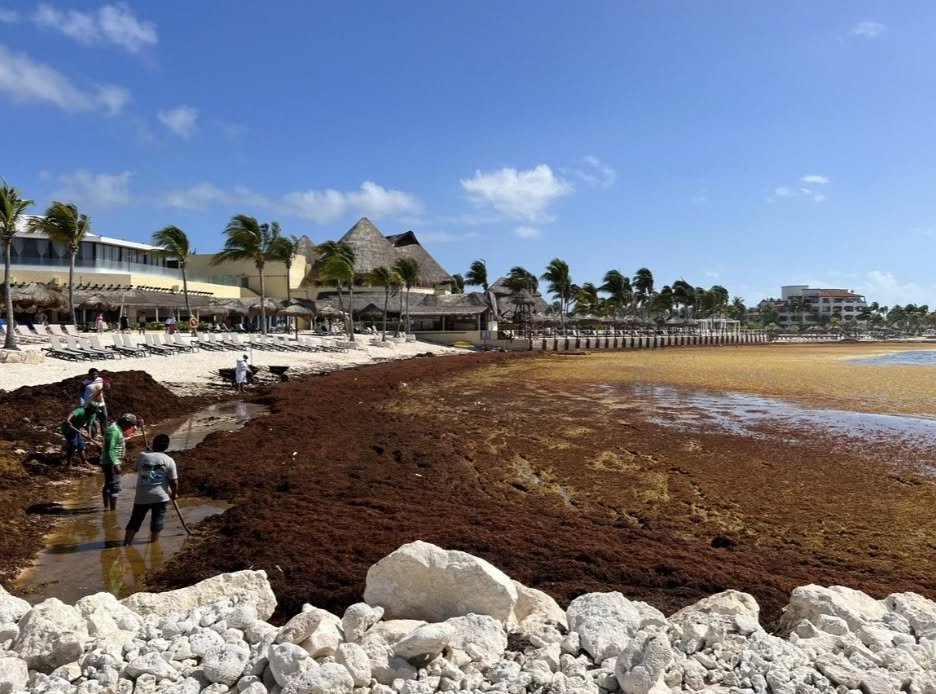
If you've seen a worrying headline about seaweed on Mexico's beaches this year, you're not imagining it, this is a heavier season than last year's. Here's what's actually happening along the coast, and how a little planning keeps it from touching your trip at all.
Quick answer: Yes, sargassum is heavier along the Mexican Caribbean this year than it was last year, but it varies a great deal by stretch of coastline, and it does not mean your trip has to be affected. With the right location and timing, a Mexico all-inclusive vacation is still a wonderful choice this season.
If you've been researching a trip to Cancún, Playa del Carmen, or Tulum and stumbled across a headline about seaweed, I want to talk about it plainly, because you deserve a straight answer. Mexico is still a wonderful choice this year, and I'd rather tell you what's actually happening than let you find out from a worrying photo online.
What's actually happening this year
According to the most recent count, published in mid-September, over 124,850 tons of sargassum have been removed from Quintana Roo's beaches between April and August of this year, close to 29,000 tons more than the same stretch in 2025. There's still roughly two months left in the season, which typically winds down in the fall.
That number sounds big, and it is, but it isn't spread evenly. This is the part that matters most for your planning.
Where it's heaviest, and where it's lighter
Playa del Carmen has seen the most this year, followed by Cancún, Puerto Morelos, and Tulum. Mahahual and Xcalak, further south, have seen a meaningful amount as well. On the lighter end, Isla Mujeres and especially Cozumel have seen far less, a small fraction of what the hardest-hit areas are dealing with.
Crews haven't been sitting still, either. Between state and municipal teams and the Mexican Navy, well over 120,000 tons have already been physically removed this season, and the Navy has installed more than 12,800 meters of containment barrier at strategic points along the coast to keep it from reaching the shore in the first place.
What I actually check before recommending a resort this season
This is where a little local knowledge goes a long way, and it's exactly what I'm doing behind the scenes before I ever send you a proposal. Exactly where a resort sits along the coast matters a great deal, since conditions can shift meaningfully within just a few miles of the same town, so I check current, real-time conditions before finalizing anything, then follow up with the resort directly about its own cleanup schedule and barrier setup, since some properties are simply more proactive about it than others.
None of that is complicated. It's just the kind of digging that takes time you'd rather spend dreaming about your trip than reading seaweed reports.
Why Mexico still has wonderful options this season
A heavier sargassum year doesn't erase everything that makes the Mexican Caribbean special, the culture, the food, the resorts themselves, the ease of getting there. It just means being a little more thoughtful about where along the coast you land, and going in with a resort that's genuinely staying on top of it. Plenty of properties are, even in the busier areas, and the quieter stretches of coastline are having a lovely season with barely any of it at all.
If you're picturing a Mexico trip this year, I'd love to help you find the right stretch of coast for what you're picturing, whether that's a honeymoon, an anniversary, or a family week. That's always where I like to start.
A few questions I get asked about this
Is sargassum bad in Cancún right now, in 2026? It's a heavier year than 2025, and Cancún is one of the more affected areas, but conditions shift by location and by week. A resort in the right spot, with an active cleanup routine, can still offer a beautiful, clean beach experience.
Which areas of the Mexican Caribbean have less sargassum this year? Cozumel and Isla Mujeres have seen far less than the mainland Riviera Maya coast this season. Some stretches of the mainland are also lighter than others, which is worth checking specifically rather than assuming by town name alone.
Should I cancel or rebook my Mexico trip because of sargassum? Not necessarily. For most travelers, the better move is choosing the right location within the region and confirming current conditions closer to your travel dates, rather than avoiding Mexico altogether.
What can a travel advisor do about sargassum that I can't do on my own? Mostly, it's the digging most travelers don't have time for: checking real-time conditions rather than old marketing photos, knowing which stretches of coast are faring better this season, and asking a resort directly about its own cleanup efforts before you ever book.

How to Choose the Right African Safari for Your Trip
Saying you want to "go on safari" is a bit like saying you want to "go to Europe." Here's how the right safari changes depending on who's traveling, the occasion, and what kind of trip you're actually picturing.
Quick answer: There's no single version of "going on safari." The right destination, pace, and length of trip depend on who's traveling and what the trip is actually for. A honeymoon safari, a family safari, and a milestone bucket-list safari can look almost nothing alike, even though all three start with the same two words. Here's how to think through which one fits you.
Hearing "African safari" tends to bring the same handful of images to mind: lions, elephants, and maybe a khaki outfit with an unreasonable number of pockets. But saying you want to "go on safari" is a bit like saying you want to "go to Europe." There's some narrowing down to do first, because the safari built for honeymooners looks quite different from the one built for a family with teenagers, which looks different again from the trip someone's been dreaming about for twenty years. Here's how to think through which version fits you.

The Honeymoon Safari
This is the version for a couple who wants real adventure, without losing the honeymoon feeling.
A strong starting point is Tanzania's Serengeti, spending your days spotting lions, elephants, and plenty more, with intimate lodges and romantic dinners built into the itinerary. After several days of game drives, a short flight to Zanzibar hands you white-sand beaches, turquoise water, and a few days of doing genuinely nothing. Safari paired with beach time is what turns this into a honeymoon rather than just a wildlife trip.
When to go: June through October is generally peak safari season, with drier weather and excellent wildlife viewing. Demand and pricing climb along with it, and shoulder and low season each come with their own trade-offs worth weighing.
How long to stay: Around 10 to 14 days for the full safari-and-beach combination. That gives you enough time for several safari days in Tanzania before slowing all the way down in Zanzibar, without spending the honeymoon mostly packing, unpacking, and catching flights.

The Family Safari
An elephant at the zoo is neat. An elephant in the wild is the kind of moment nobody in the family forgets.
South Africa is a strong starting point here, especially for families who want their safari to be part of a bigger adventure. A few days spotting wildlife in Kruger National Park pairs naturally with Cape Town, which adds beaches, penguins, striking scenery, and plenty to do beyond game drives. The detail that matters most for this trip is matching the safari experience to your kids' ages, since some lodges and activities carry age restrictions while others are built specifically with families in mind.
When to go: May through September brings drier conditions and strong wildlife viewing around Kruger. The wetter months bring lush, green landscapes and new baby animals, though thicker vegetation can make spotting wildlife a little harder.
How long to stay: Around 10 to 12 days gives you time for a few safari days plus Cape Town, without asking the whole family to relocate every couple of days.
The Bucket List Safari
This is the "we've been talking about this for twenty years, and we're finally going" itinerary, built for a milestone birthday, a retirement trip, or simply the trip that's been waiting its turn.
Rwanda is where this version often starts, trekking through the forests of Volcanoes National Park for the chance to spend an unforgettable hour with mountain gorillas in the wild. Rwanda pairs naturally with a classic safari in Kenya's Maasai Mara, trading misty mountain forests for wide-open savanna, big cats, and a completely different wildlife experience. If a trip has waited this long to happen, it deserves room to breathe rather than a rushed itinerary.
When to go: Gorilla trekking happens year round, though the drier seasons, generally June through September and December through February, tend to make trekking conditions a little easier.
How long to stay: Around 10 to 14 days if pairing Rwanda with a safari elsewhere. This isn't a trip worth compressing into a four-night visit after flying halfway around the world for it.
What If You Want a Little of Everything?
Maybe you're reading this thinking you're the honeymooner who also wants the bucket-list version, complete with a little milestone-level splurging. That's exactly the point. These aren't three rigid packages to pick from. They're proof that safari can be shaped around who you are and what you actually want the trip to feel like, rather than the other way around.
Where you go, where you stay, how long you spend there, and what you pair it with should all follow from that. If all you know right now is "I want to go on safari," that's plenty to start with. The rest is exactly what I'm here to help you figure out.
A few questions I get asked about this
How far in advance should a safari be booked? Safari lodges, especially the smaller and more sought-after ones, tend to book up well ahead of peak season. Planning six months to a year out gives you the best access to the specific lodges and dates that fit your trip.
Can a safari be combined with a beach trip? Yes, and it's one of the most popular pairings, particularly for honeymoons. Tanzania paired with Zanzibar is a classic version of this, offering several days of game drives followed by beach time to unwind.
Is a safari safe or appropriate for kids? It depends heavily on the destination, lodge, and the ages involved. Some properties have age restrictions for game drives, while others are specifically designed with families and children in mind, which is why matching the right lodge to the right ages matters so much.
What's the difference between peak and off-peak safari season? Peak season generally brings drier weather and easier wildlife viewing, along with higher demand and pricing. Wetter months can mean lusher scenery and new wildlife births, though thicker vegetation can make animals a bit harder to spot.

What to Never Put in Your Checked Bag
Sunscreen and cute dinner outfits usually make it onto the packing list. It's the less exciting items, the ones you actually need if your checked bag doesn't show up, that tend to get forgotten. Here's what belongs in your carry-on instead.

Quick answer: Keep your medications, travel documents, valuables and electronics, and one full change of clothes in your carry-on rather than your checked bag. A checked bag can be delayed or lost, and none of those items are ones you want to be without while you wait for it to turn up. Here's the full list, and why each item earns its spot.
The dinner outfits are packed. The sunscreen made the cut. You've downloaded enough books to survive a fourteen-hour flight delay. It's the far less exciting items, the ones you barely notice until the exact moment you need them, that tend to get left out of the suitcase entirely. Here's what I always tell clients to add to the list before their next trip.
A Physical Form of Payment
Apple Pay and Google Pay are wonderful, right up until a card reader or a country doesn't cooperate with either one. Bring at least one physical credit card, ideally a backup card too, and a small amount of local cash for your destination. If a rental car is part of the trip, double-check ahead of time which physical card needs to be presented at pickup.
Your Insurance Information
Nobody plans on needing medical care while traveling, which is exactly why this one gets forgotten so often. Save or print your travel insurance details along with your regular health insurance information, and know ahead of time who to contact and how if you ever need to use that coverage.
Backups of the Important Documents
A passport matters. A backup copy of that passport matters even more the moment the original goes missing. Keep copies of your passport, visa or entry documents, itinerary, confirmations, addresses, and important phone numbers somewhere secure that doesn't depend on your phone or wallet being with you. Technology is fantastic until it decides to fail you in an unfamiliar country.
More Medication Than You Think You Need
If you take prescription medication, resist the urge to pack the exact number of pills for the exact number of days. Flights get delayed, trips get extended, and a little extra buffer goes a long way. Bring more than you need, keep essential medication in your carry-on rather than a checked bag, and check destination-specific rules ahead of any international travel.
A Backup Way to Power Your Phone
Boarding passes, maps, translation apps, hotel confirmations, and the ability to reach your travel advisor when something goes sideways all live on that one device. A portable charger has a way of going from a nice extra to the most important item in your bag by day two of a trip.
A Photo of Your Checked Luggage
Before handing your suitcase over and watching it vanish down the conveyor belt, take a quick photo of the bag itself and what's inside it. If it's delayed or lost, that photo gives you something to point to when describing it and a record of what was packed if you ever need to file a claim.
The Bottom Line
None of these items take up much room, and every one of them is far easier to pack ahead of time than to replace mid-trip. A little extra thought before you zip that bag closed can save an entire afternoon of your vacation later.
Destination-specific packing details, the kind that vary by climate, culture, or activity, are something I'm always happy to include alongside your custom itinerary. When it's time to pack your bags, you know where to find me.
A few questions I get asked about this
What should always go in a carry-on instead of a checked bag? Medications, travel documents (or copies of them), valuables and electronics, and at least one change of clothes. These are the items that cause the most stress if a checked bag is delayed, so keeping them within arm's reach removes that risk entirely.
Is it really necessary to carry paper backups of documents if everything is on my phone? Yes, especially for international travel. A phone can lose battery, get lost, or stop working at the worst possible moment. A paper or offline copy of your passport, itinerary, and confirmations means you're never fully dependent on your phone functioning.
How much extra medication should I actually pack? More than the exact number of days you'll be traveling. Delays and extended trips happen, and running out of a prescription somewhere unfamiliar is a much harder problem to solve than packing a few extra doses.
What's the point of photographing checked luggage before it's handed over? It gives you a clear reference for describing the bag if it's delayed or lost, and a visual record of what was inside if you need to file a claim with the airline.

Is There Really a "Best Time to Visit"?
Googling "best time to visit" gives you one confident month and no context. Here's what peak, shoulder, and low season actually mean, and how to figure out which one fits the trip you're picturing.
Quick answer: Not really, at least not one that applies to everyone. Google will hand you a confident answer like "May through September," but that month is usually optimized for weather alone, and weather is only one piece of what makes a trip feel right. The real answer depends on what you're hoping to get out of the trip: certain sunshine, a lighter price tag, fewer people in your vacation photos, or something else entirely. Here's what peak, shoulder, and low season actually mean, so you can figure out which one fits you.
Typing "best time to visit ___" into Google feels like a perfectly reasonable place to start planning a trip, and it is. The trouble is what happens next: Google hands you a tidy answer with total confidence, and never mentions that "best" was doing a lot of work in that sentence. Best for the weather? Best for your wallet? Best for not standing shoulder to shoulder with everyone else trying to get the same photo?
There's rarely one universally right month for a destination. There's just the right month for you. So before that AI-generated answer talks you into a date range, here's a quick rundown of what peak, shoulder, and low season actually mean, and what each one trades you.
Peak Season
Peak season is when a destination is hitting some combination of its best weather, biggest events, school breaks, and highest demand all at once.
The appeal is easy to understand. There's usually a real reason everyone wants to be there at that exact time: the weather is dependable, seasonal attractions are running, and the destination feels genuinely lively. The trade-off shows up in the form of higher prices, tighter availability, and a lot more company while you're there.
Peak season tends to make the most sense when experiencing a destination under a very specific set of conditions matters more to you than saving money or having the place feel a little quieter.
Shoulder Season
Shoulder season sits between peak and low, and for a lot of travelers it's a genuinely lovely middle ground.
Crowds thin out, pricing often softens, and the weather can still be pretty great. It isn't an automatic win for every single destination, though, and for some of the most popular spots, that traditional shoulder window keeps getting harder to find. What you're weighing here is a bit of weather unpredictability or a reduced seasonal schedule against those quieter, more affordable weeks.
For travelers with some flexibility in their dates, shoulder season is often the sweet spot.
Low Season
Low season is when demand drops, and with it come some genuinely tempting perks: better availability, softer pricing, and far more elbow room. There's usually a reason fewer people are booking that particular window, though, so it's worth going in with your eyes open. Heat, rain, seasonal closures, or a scaled-back version of the experience you were picturing can all come with the territory, depending on where you're headed.
If none of that bothers you, low season can hand you a wonderful trip for a fraction of the peak price. It just calls for a little extra care depending on the destination.
So How Do You Actually Choose?
Before you lock in a month because a search result crowned it "the best," it helps to ask yourself a few honest questions:
Would you happily spend more for reliably gorgeous weather?
Are you willing to risk a little rain in exchange for fewer crowds?
Is there one specific experience you absolutely want, regardless of the season?
Do your dates need to work around school schedules or a set amount of PTO?
Would you rather shift your timing than stretch your budget?
Those answers tell me far more than whatever month a search engine decided to put at the top of the page. When I'm planning your trip, I'm never hunting for the best time to go somewhere. I'm looking for the best time for you to go.
What This Looks Like When We Plan Together
This is exactly the kind of question I love sitting down with a client to work through. We'll talk through what actually matters to you for this particular trip, whether that's guaranteed sunshine for a wedding-adjacent honeymoon, a quieter resort for a family with a toddler in tow, or simply getting the most trip for your budget. From there, I can tell you honestly what a given month will actually feel like at the destination you're considering, not just what a search result says about it.
If you already have a destination in mind and no idea when to actually go, that's exactly the kind of puzzle I'm here to help solve.
A few questions I get asked about this
Is peak season always worth the extra cost? It depends entirely on what you're after. If dependable weather or a specific event is the whole point of your trip, it's often worth it. If your priority is a relaxed, budget-friendly week, it usually isn't the season built for you.
Is shoulder season a safe bet everywhere? Not automatically. It's a wonderful option in a lot of destinations, but a few popular spots have seen their shoulder window shrink or shift in recent years. This is worth checking destination by destination rather than assuming it applies across the board.
Will I regret booking low season? Not necessarily. Plenty of travelers have a fantastic time in low season once they know what to expect walking in, whether that's a bit more heat, a chance of rain, or a couple of closed amenities. The key is knowing those trade-offs ahead of time instead of discovering them once you've landed.
How do you actually decide the right time for a client? Mostly by asking questions before I ever suggest a month: what matters most to you, what you're flexible on, and what would genuinely ruin the trip if it went sideways. The right season is the one that fits those answers, not the one at the top of a search result.

The Trips Worth Having a Person For
AI trip-planning tools are everywhere right now, and they're genuinely useful for early inspiration. But when it comes to family trips, honeymoons, and the getaways that actually matter, a recent national survey found most travelers still want a real person handling the details. Here's what that actually looks like, and why.
A lot of my clients start their trip the same way these days: a few searches, an AI planning tool pulled up in another tab, maybe a Pinterest board that's been quietly growing for months. And honestly, I think that's great. Those tools are wonderful for early inspiration, for narrowing down a region, for figuring out whether you even like the idea of an overwater bungalow before you go looking into what one costs.
Where it gets interesting is what happens next. A national survey released earlier this month asked travelers who already use AI tools a simple question: when it's time to actually make the call on a real vacation, who do you trust with it? Nearly half said they'd rather hand that decision to a person than to an AI. For Baby Boomers, it wasn't close: 59% wanted a human, only 15% wanted the AI. And 82% of AI users said having a real person to talk to still felt extremely or very important when they were booking.
So I've been thinking about why. Not in a defensive way, I promise, more out of genuine curiosity about what my own clients would say if you asked them the same question. And when I looked at what the survey found, it lined up almost exactly with the moments I hear about most.
When the trip has more than one traveler to think about
The number one reason people gave for wanting a person instead of an AI was coordinating group or family travel. If you've ever tried to plan a trip that needs to work for a toddler, a teenager, and a grandparent who isn't up for a 6am excursion, you already know why. It's not really about the booking. It's about someone holding the whole picture in their head at once: whose room needs to be near whose, who's celebrating a birthday on day three, who really just wants a lounge chair and a good book. That's the part I love most about family trips, honestly. Getting to know a family well enough to plan around who they actually are, not just how many rooms they need.
When the trip has a lot of moving pieces
Right behind family travel, people said they wanted a person for anything complex or multi-destination. This is honeymoon territory more than anywhere else. A week that moves between two islands, a proposal that includes a private dinner on one night and nothing planned at all on another, on purpose, because you asked for it that way. An AI tool can hand you a list of resorts. It can't sit with you on a call and ask what kind of mornings you actually want, or notice that you keep circling back to photos of the same kind of beach every time.
When something goes sideways
This one is close to my heart, because it's the moment I think about most when clients ask why they'd pay a bit more to book with me instead of a site. Over a third of people in this survey said a trip disruption, a canceled flight, a double-booked hotel, is exactly when they want a human in their corner. I've had that call. It's never fun in the moment, but it's also exactly what I'm here for. You've saved up that hard-earned time off, and the last thing I want is for you to spend an hour of it on hold with an airline. That's my hour to spend, not yours.
When the trip actually matters
And then there's the trip itself: a luxury booking, or simply one that means something. An anniversary. A honeymoon. The kind of week you'll still be talking about years later. People said they wanted a person for these specifically because the stakes felt higher, and I think that's exactly right. These aren't trips where you want to find out after the fact that the "ocean view" was actually a parking lot view from one particular angle.
What this actually looks like with me
None of this is a knock on planning tools. Use them for inspiration all you want, genuinely. But when it's time to turn the ideas into a real trip, this is where the concierge process earns its keep: a proposal built around what you actually told me, not a generic template; a video walkthrough so you understand exactly what you're looking at and why; and me, staying in your corner from the moment you book through the moment you're home, handling the excursions, the reservations, and yes, the occasional canceled flight, so none of that has to be your job while you're supposed to be on vacation.
If you're somewhere in the middle of planning a family trip, a honeymoon, or a getaway that actually matters to you, I'd love to hear what you're picturing. That's always where I like to start.

What a Mini-Moon Is, and How It Fits Into Your Honeymoon Plans
What Is a Mini-Moon? How It Fits Your Honeymoon Plans
If you have been seeing the word "mini-moon" pop up on wedding accounts and were not totally sure what it meant, you are in good company. A mini-moon is a short getaway you take right after the wedding, usually a few easygoing days somewhere close, with your bigger honeymoon saved for a little later down the road.
And it is not some fringe idea anymore. Fora's 2026 wedding and honeymoon report found that 59% of couples are now taking a short mini-moon right after the wedding and holding the larger trip for later. So if this is the direction you are leaning, you are squarely in the majority, and there is nothing behind or unusual about doing it this way.
Why couples are choosing a mini-moon right now
There are a few very practical reasons this pattern took off, and none of them have anything to do with loving each other less.
Budget timing is the big one. A wedding takes a real bite out of the savings account, and a lot of couples would rather not put their dream trip on a credit card three days after the reception. A shorter mini-moon lets you get away and exhale now, while the larger honeymoon gets the runway it deserves.
Work schedules play a part too. Taking two full weeks off right after burning through your PTO on the wedding itself is a tall order for a lot of people. A long weekend or a quick four-night escape is far easier to pull off in that window.
And honestly? Sometimes you just want to be alone together the second the party ends. After months of planning and a full day of being "on" for everyone you love, slipping away somewhere quiet for a few days is its own kind of medicine.
The case for planning both trips together, even months apart
Here is where I gently step in, because this is the piece couples tend to miss when they book the two trips separately or try to piece it together alone.
When we look at your mini-moon and your main honeymoon as one plan, even if they land eight months apart, your whole budget gets to work smarter. We can keep the mini-moon simple and close to home so more of your money flows toward the trip you will be talking about for the rest of your life. That way the main honeymoon still gets to feel like the main event, with room to be everything you pictured.
There is also something that gets overlooked. By the time your bigger trip rolls around, I already know you. I know how you like your mornings and what made you light up on the mini-moon. So planning the honeymoon becomes faster and far more personal, because we are building on what we already learned together instead of starting from a blank page.
What a mini-moon is perfect for (and what to save for the big trip)
A mini-moon is at its best when it is easy. Think a short flight or even a drive, a cozy resort or a charming boutique hotel, and a few days with no agenda beyond room service and sleeping in. A beach a couple hours away, or a quiet cabin with a hot tub. The whole goal here is decompression, so simple and close usually wins.
The bucket-list magic is what we save for the main honeymoon. That is where the longer flights and the once-in-a-lifetime resort belong, the trip you have been dreaming about since the moment you got engaged. Because it has room to breathe and a budget that is actually ready for it, the big trip gets to be exactly as special as you imagined.
Wherever you are in this, let's talk it through
Whether you are already picturing both trips or still deciding if a mini-moon is even your style, this is a perfect time to reach out. When we plan your travel together, we can map out a timeline that fits your life and your budget, so each trip gets to be exactly what it should be.
Send me a message whenever you are ready and tell me where you are in the planning. Even if the wedding is a year out, it is never too early to start dreaming, and I would love to welcome you into the family and help you shape the whole thing.
Mini-moon questions, answered
What is a mini-moon? A mini-moon is a short getaway couples take right after the wedding, usually a few easygoing days somewhere close to home. The larger honeymoon is saved for later, giving you a way to relax right away without rushing the bigger trip.
How is a mini-moon different from a honeymoon? A mini-moon is a brief, low-key escape taken soon after the wedding, often just a long weekend. The honeymoon is the longer, bucket-list trip planned for weeks or months later. Many couples in 2026 do both, using the mini-moon to decompress and saving the big adventure for when they have more time and budget.
How many couples take a mini-moon? According to Fora's 2026 Wedding and Honeymoon Trend Report, 59% of couples now take a short mini-moon right after the wedding and delay a larger honeymoon for later. It has become the majority approach, so couples choosing it are in very good company.
Should I plan my mini-moon and honeymoon at the same time? Planning both together tends to lead to a better outcome, even when the trips are months apart. Your overall budget gets used more wisely, and by the time the bigger trip comes around, your advisor already knows exactly what you love.
Where should we go for a mini-moon? The best mini-moon spots are easy to reach and low-pressure. A short flight or a drive to a cozy resort or a quiet cabin works beautifully. Since the goal is rest right after the wedding, close and simple usually beats ambitious.

How to Choose a Honeymoon Destination That's Right for the Two of You
How to Choose a Honeymoon Destination That Fits You
A fresh batch of honeymoon rankings comes out around this time each year, and couples often send them my way wondering if their heart is set on the "wrong" place. Here is what I tell all of them: the lists move around, and that is completely normal.
This year one of the big reports (Honeyfund's 2026 Honeymoon Destinations report) showed Mexico slipping out of its usual top three for the first time in eight years. Hawaii kept the number one spot, Italy came in second, and Japan reached its highest ranking ever. Interesting to know? Sure. But none of it changes the thing I actually care about when I help you plan, which is finding the place that fits the week the two of you are dreaming about.
Why honeymoon rankings shift every year (and why that's fine)
Rankings reflect where a lot of couples happened to be booking and reviewing over the past year. They are a snapshot of the crowd, not a verdict on your trip. A destination does not get less romantic because it dropped a few spots on someone's list, and a new number one is not automatically right for you just because it climbed.
So when a ranking makes you second-guess a place you were genuinely excited about, that is my cue to slow you down and ask a better question than "what is trending."
What actually makes a honeymoon destination right for you
Before I ever recommend a destination, I ask you a handful of questions, and honestly they have very little to do with any list. I want to know how you picture your mornings. Slow coffee on the balcony with nowhere to be? Or up early with a plan, ready to explore before the heat sets in?
I also want to know how social you want the week to feel. Some couples light up around a lively pool with music and a swim-up bar. Others are picturing a quiet stretch of sand where they barely see another soul. Neither one is better. They simply point me toward very different resorts.
Then I ask what "relaxing" actually means to each of you, because it is rarely the same for both people. One of you might recharge by doing absolutely nothing for six days straight. The other might feel most rested after snorkeling a reef or catching a sunrise excursion. A honeymoon that works leaves room for both of those versions of rest.
What a thoughtfully planned Mexico or Caribbean all-inclusive gives you
Here is where Mexico and the Caribbean still shine for so many of my couples, ranking or no ranking. A well-chosen all-inclusive takes the mental load completely off your plate. Your flights are short, your meals and drinks are handled, and the hardest decision of your day is whether to order that second margarita up at the pool or down on the beach.
What a ranking can never tell you is which of these resorts fits you. Two properties can sit on the very same beach and feel like completely different vacations. One leans loud and lively. The next feels hushed and grown-up, built for long dinners and early nights. Matching you to the right one is the part I love, and it is the part a Pinterest list will never do for you.
Two couples, two very different weeks
Let me show you how differently this can go. Picture two couples who book with me in the same month.
The first couple just threw a 200-person wedding and they are still buzzing from it. They want a lively pool scene and an excursion every other day. I would point them toward a vibrant resort in the Riviera Maya with great entertainment and easy access to cenotes and Tulum, so their days stay full and fun.
The second couple is completely wiped out from wedding season and craving quiet. They want an adults-only property and long, unhurried spa mornings, with a private dinner on the beach for their first married night. I would match them to a serene, grown-up resort where the loudest thing they hear all week is the ocean.
Same region. Two completely different weeks. Both of them exactly right, because each one was built around the couple sitting in front of me.
Your version of the perfect week
So if you are staring at a Pinterest board with a nagging worry that you picked the "wrong" place, take a breath. No spot is wrong when it is chosen around the week you actually want, and finding that fit is exactly what I am here for.
When we work together on your honeymoon, we start with a real conversation about your version of a perfect week, and I build the whole thing around what you tell me. You get a plan made for the two of you and someone in your corner from the first idea all the way through your trip home.
Ready to talk it through? Reach out and tell me what your dream honeymoon morning looks like. I would love to help you make it real, and welcome you into the family while we are at it.
Honeymoon destination questions, answered
How do I choose the right honeymoon destination? Start with how you want the week to feel rather than where it ranks. Think through your ideal morning pace, how social or private you want the trip, and what genuine rest looks like for each of you. The right destination is the one that matches those answers for both partners.
Is Mexico still a good honeymoon destination in 2026? Yes. Mexico slipped out of the national top three honeymoon rankings for the first time in eight years, but it still offers short flights and gorgeous all-inclusive resorts that make a honeymoon feel effortless. For couples who want a high-touch, hands-off week, it remains a wonderful choice.
Should I pick my honeymoon based on top destination lists? Lists are a fun place to gather ideas, and they work best as inspiration. They cannot tell you which resort fits your budget or the way you and your partner actually like to travel. That match is where working with an advisor makes the real difference.
Why work with a travel advisor for a honeymoon? An advisor takes the planning off your plate and matches you to a resort that genuinely fits you, then handles the details so you can be fully present. If something goes sideways while you are traveling, you have someone in your corner solving it while you stay on your honeymoon.